Federal hiring runs on a clock it has missed for years. The Office of Personnel Management's goal, set in 2010, is 80 days from announcement to entry on duty; Government Accountability Office and OPM's own annual hiring reports have documented government-wide averages exceeding that target in most years, with the full cycle — including security clearances where required — running far longer for specialized roles. The consequence is not administrative embarrassment. It is selection: candidates with in-demand skills — technologists, medical staff, engineers — hold offers from private employers that expire in two weeks, while a federal offer sits in adjudication for months. The pipeline filters for patience and attachment to federal employment, and against market mobility, which is the opposite of what skill-gap reviews say agencies need.
Where the months go
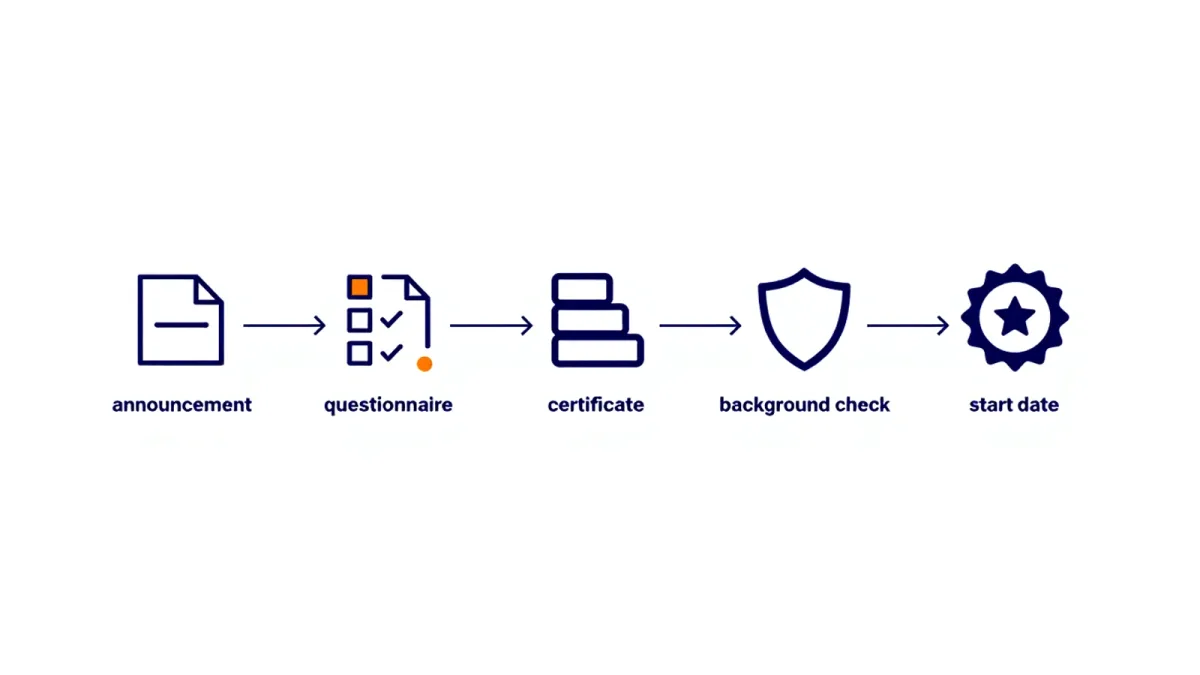
The cycle has stations, and each adds delay with a different owner. Position approval and classification: the job description must be classified to a grade — weeks when HR queues are full. Announcement and application: USAJOBS posting plus a minimum open period, with certificate issuance after rating. The structured interview and assessment layer adds its own scheduling. Selection and tentative offer. Then the two structural blocks: background investigation — ranging from a standard background check to month-heavy clearance investigations at the Office of Personnel Management-investigated tier — and the final offer, entry-on-duty date, and onboarding. The GAO's hiring reviews decompose the delays across exactly these stations and find no single villain: classification backlogs, certificate staleness — eligibility lists expire and get reissued — and investigation queues compound serially.
Why the fixes keep not working
Every administration has a hiring-speed initiative — hiring-authority expansions, category rating reform, direct-hire authorities for shortage occupations, shared-certificates across agencies — and the measured result, per OPM's own reporting, moves a few weeks at the margin and reverts. The reasons are structural. Merit-system documentation: every selection must survive protest and audit review, so process steps that private employers skip — formal rating, ranking, veterans' preference application — are load-bearing legally, not bureaucratic decoration. Clearance capacity: the government's investigation pipeline has been rebuilt since its 2014-19 backlog crisis, when queued investigations exceeded half a million, and improvements have shortened average times, but specialized clearances still gate the longest cycles. And manager behavior: hiring managers who post narrowly, interview late, and lose certificates to re-advertisement inject delays no policy removes.
What demonstrably shortens cycles
The evidence from GAO case studies and agency pilots clusters on four moves. Direct-hire and excepted-authority use for genuine shortage occupations — the mechanism the digital-service units used. Continuous recruitment: standing announcements with periodic certificate cuts, so requisitions start pre-loaded. Assessment consolidation: one validated instrument up front rather than stacked agency add-ons. And onboarding parallelism: starting background investigation at tentative offer rather than final, which the government has adopted for many positions and which safely compresses weeks. Agencies using all four hire at competitive speeds; the GAO's own high-performing examples prove the ceiling is the design, not the workforce.
FAQ
How long does federal hiring take?
Against an 80-day government-wide target, averages have run longer in most years — and months longer where background investigations or clearances gate the position.
Why can't government just hire faster?
Merit-system documentation, veterans' preference, and protest-survivable process are legally required, and clearance-investigation capacity gates the specialized roles with the worst delays.
What has actually worked?
Direct-hire authorities for shortage occupations, continuous recruitment with standing certificates, consolidated assessment, and starting investigations at tentative offer.