Analysis
How to Write a Feature Story That Outlives the News Cycle
Long-form structure, sourcing depth, and angle selection that keep a cover story useful for years.
Henrik Larsen · September 27, 2026
Extended examinations of how institutions behave over a decade: budgets, headcount, capability, and the quiet erosion or recovery of state capacity. Sources are audit offices, statistical agencies and comparative studies. Intended for policy researchers, funders and senior officials who need trend evidence rather than a weekly snapshot.
Long-form structure, sourcing depth, and angle selection that keep a cover story useful for years.
Henrik Larsen · September 27, 2026A plain framework for judging a firm's fundamentals, moat, and management — built on evidence, not enthusiasm.
Christopher Lee · September 20, 2026
Formal program evaluation ratings promised a budget driven by evidence. The record shows why the tool was retired — and where the rating impulse went next.
Asha Venkataswamy · September 13, 2026
The 2018 law ordered agencies to inventory their data, name chief data officers, and open what can be opened — the quiet work is behind schedule and genuinely changing how government knows itself.
Asha Venkataswamy · August 10, 2026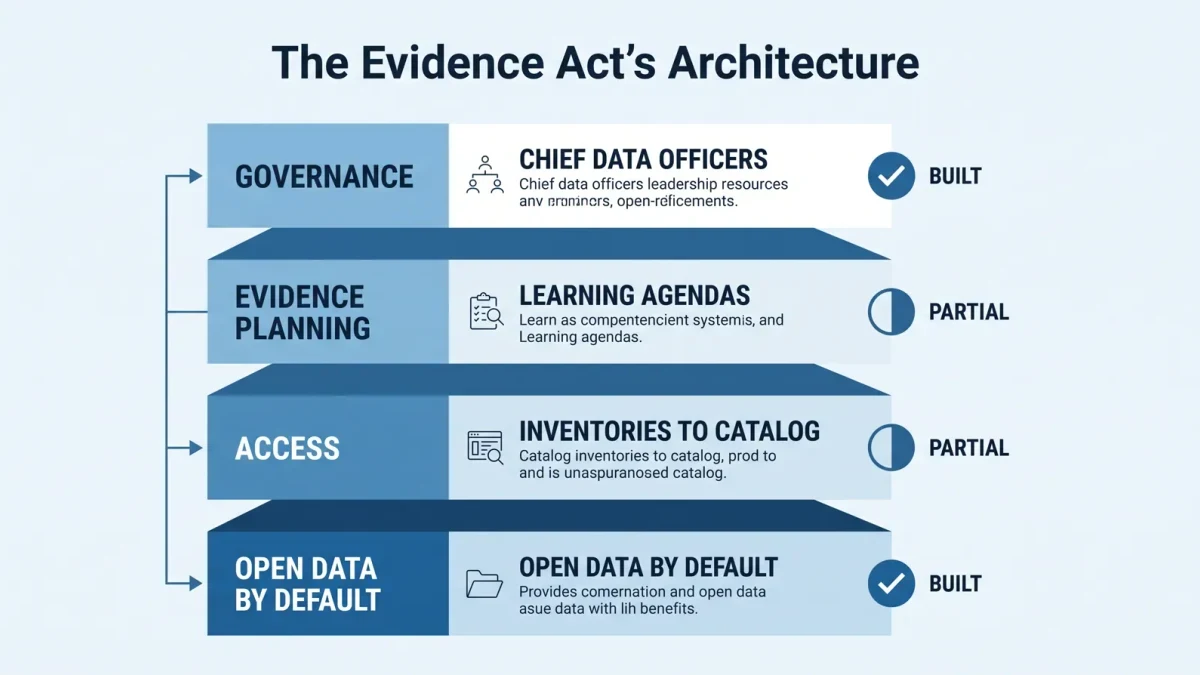
A decade of federal grants meant to retire decades-old jobless-benefits code ran into staffing gaps and contracting delays, then a 2025 funding cancellation forced states to rescale projects mid-build.
Christopher Lee · August 10, 2026