Government information-technology modernization has a recurring cost profile, and it is not a mystery. The Government Accountability Office's IT-dashboard-era reviews have documented multi-billion-dollar overruns and years-long delays across flagship systems — tax processing, benefits eligibility, defense logistics — with the same causal pattern each time. The pattern has three structural drivers: undocumented business logic locked in the legacy system, dirty data, and the parallel-run trap. None of them is a vendor problem, which is why replacing vendors does not fix them.
Driver one: the code is the documentation
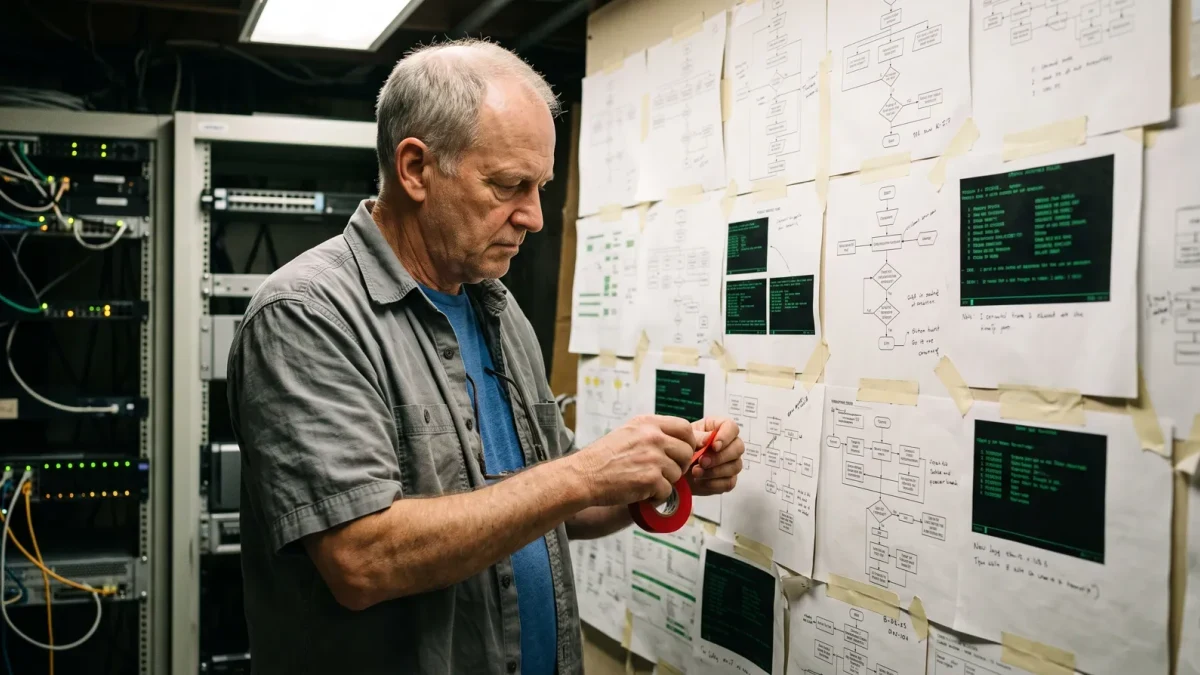
A decades-old benefits or tax system encodes thousands of statutory and administrative rules in its code — eligibility thresholds, effective dates, rounding conventions, edge-case handling — and in many agencies the humans who wrote those rules are gone. The modernization must reverse-engineer behavior before it can replace it, and the reverse-engineering effort scales with statutory complexity, not system size. This is why replacements of systems under active legislative change — tax systems, immigration case processing — overrun worst: the requirements keep moving while the archaeology continues. The Government Accountability Office's business-systems modernization reviews name this as a root cause on program after program.
Driver two: data archaeology
Migrating fifty years of records means reconciling formats, key conventions, and decades of patches. Duplicate identities, orphan records, and inconsistent historical codes surface only during migration, and each anomaly requires a business decision — merge, keep, archive — that the program never budgeted. Agencies that run data-cleanup programs before procurement, rather than as part of it, pay materially less; the evaluations of state benefits-system modernizations by federal oversight bodies show the ones that sequenced cleanup first landing closer to budget.
Driver three: the parallel-run trap
The legacy system cannot be switched off until the replacement is proven, so the agency pays for both — double infrastructure, double maintenance, and staff operating two processes simultaneously, sometimes for years. Every month of delay extends the double-pay period, which converts schedule slip directly into cost growth. This is also why shutdowns and budget disruptions hurt modernizations disproportionately: a 43-day lapse like October-November 2025 stops migration testing cold while the double-pay meter keeps running.
What actually lands on budget
The successes share three moves. Incremental replacement — one function at a time, each shipped into production and verified against the legacy output, rather than a big-bang cutover; the GAO's high-performing IT case studies consistently show this pattern. A named data-readiness phase with its own budget before the integration contract. And contracting that buys outcomes in increments — firm-fixed-price or fixed-level-of-effort slices per release — instead of one cost-plus mega-contract whose incentives point toward discovering requirements slowly. None of this is new knowledge; the GAO has published versions of this list for twenty years. The honest conclusion is that overruns are not an engineering failure but a procurement-design choice: agencies keep buying modernization the way the failing programs did.
FAQ
Why do government IT projects overrun?
Undocumented legacy logic that must be reverse-engineered, dirty historical data requiring business decisions at every step, and paying for legacy and replacement systems in parallel while delays extend.
What is a big-bang cutover?
Replacing an entire legacy system in one switchover — the pattern most associated with visible failure, versus incremental releases verified against legacy output.
Do vendor changes fix failing modernizations?
Rarely — the three structural drivers are agency-side: undocumented rules, data condition, and the parallel-run economics that no vendor controls.