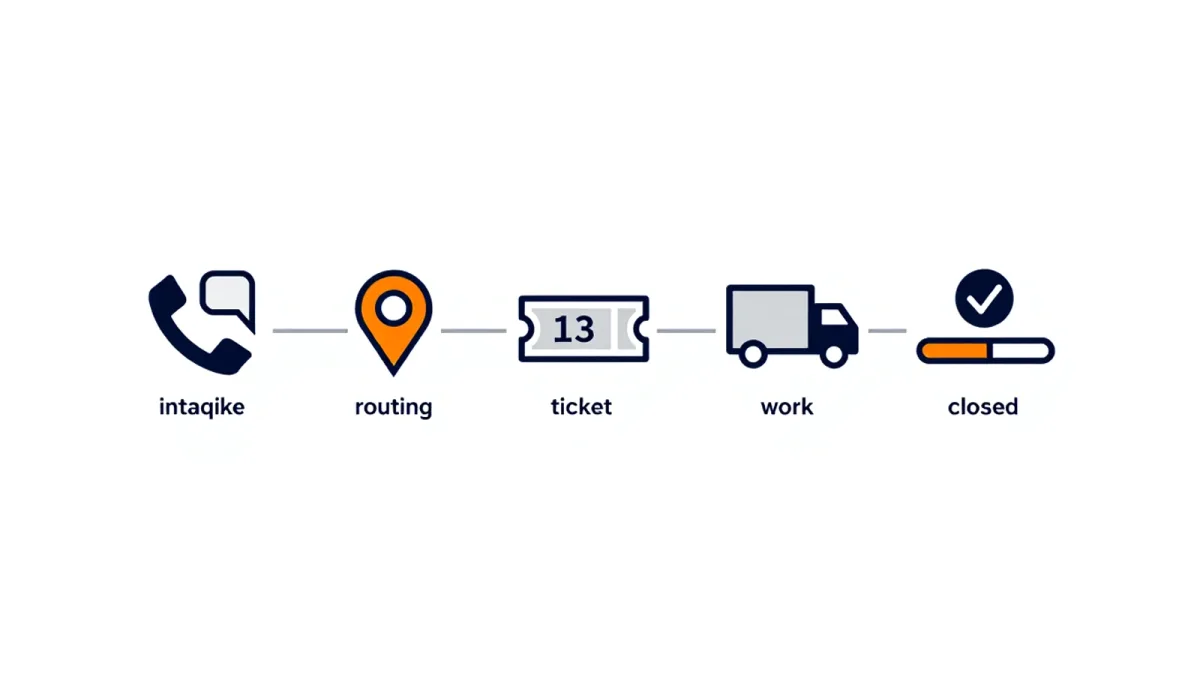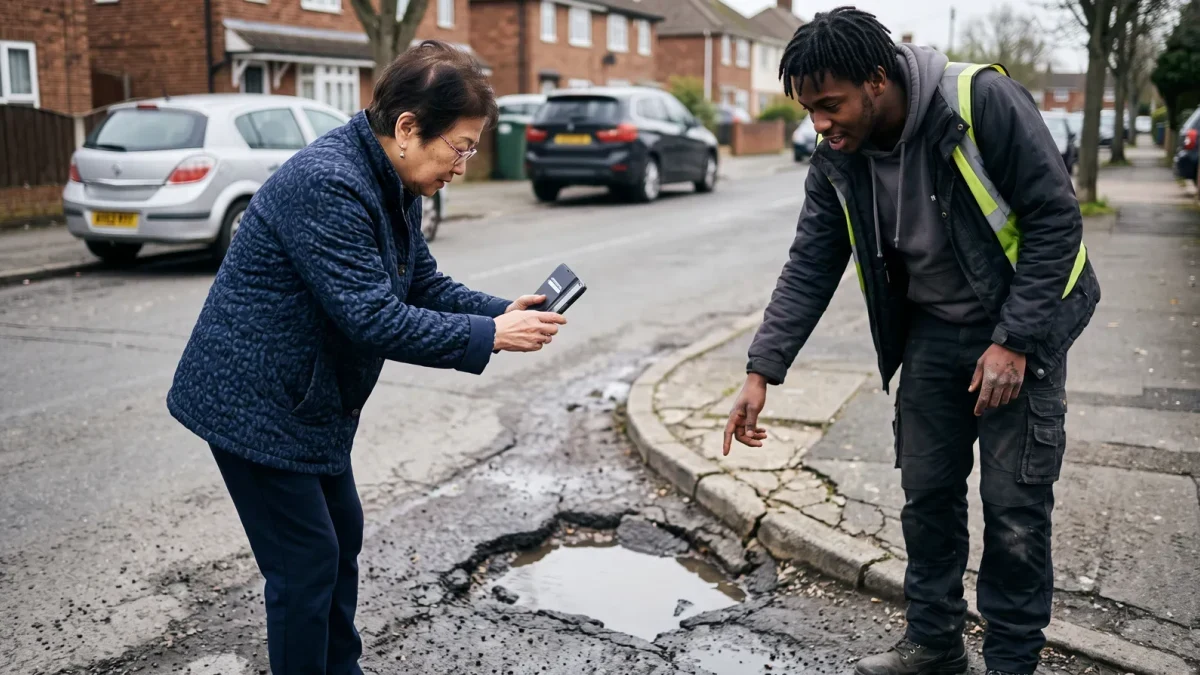
311 systems are the front door of city government: one number for potholes, missed trash, noise complaints, and tree trimming. The Open 311 movement — a data standard, not a piece of software — made the back end visible. Cities that adopt Open 311 publish service requests through a documented application programming interface with a request ID, status, and timestamps, so anyone can see when a request was opened, when it was closed, and how long each step took. New York, Chicago, Boston, and San Francisco publish 311 request data in open portals under their open-data laws, and Chicago's data portal — running on standards consistent with the Open 311 specification maintained by the Open311 community and previously advanced by Code for America — has made service-request latency a measurable civic fact since the early 2010s.
What the standard actually specifies
Open 311 defines the plumbing: a common API so a request created in one system can be read by another, with defined fields — service code for the request type, address or coordinates, status values such as open, in progress, and closed, and media attachments. The point is not the technology but the semantics. When every department reports request status in the same vocabulary, a reporter or council office can ask a question that used to be unanswerable: what share of pothole requests opened in a district closes within 30 days, and how does that compare with the citywide average?
How cities use the exhaust
Three uses dominate. Performance management: public dashboards rank departments and, in some cities, neighborhoods by resolution times, which reliably surfaces inequity — a pattern documented in service-inequity research on 311 data in several large cities, where affluent neighborhoods often see faster resolution of comparable requests. Predictive operations: repeated requests for the same type at the same location cluster into problems worth fixing at the asset level rather than the complaint level, the analytic move behind streetlight and water-main programs in Chicago and elsewhere. And procurement evidence: request volumes by category feed maintenance contracts, giving contract managers a demand baseline that vendor self-reporting used to obscure.
Where open 311 misleads
The data has known biases that dashboards rarely print. Requests measure who complains, not what is broken: 311 usage skews toward residents with time, language access, and trust that the call leads anywhere, so raw request maps understate problems in the quietest neighborhoods. Duplicate suppression is inconsistent — the same sinkhole generating forty requests can inflate or deflate statistics depending on how the system merges them. And closure is self-reported by the department doing the work, with no independent verification; an Open 311 status of closed means the department marked it closed, which is why cities that re-survey a sample of closed requests, as some inspectors-general and analytics offices do, find a measurable gap between closed and actually fixed.
What separates a useful portal from a data dump
The difference is stewardship. Useful programs publish on a fixed cadence with documented schema changes, keep the request ID stable across systems, and annotate known data problems instead of quietly correcting them. They connect the API to the accountability loop — council district, responsible department, and closure reason as fields — rather than releasing raw location points. And they fund the boring middle: deduplication rules, service-code governance so categories stay comparable across years, and archiving so longitudinal questions stay answerable. Cities that skip the stewardship still get press releases; they just do not get answers.
FAQ
What is Open 311?
A standard API specification for reporting and tracking non-emergency city service requests, giving each request a public ID and status that outside systems can read.
Is 311 data a fair measure of neighborhood problems?
Not by itself — it measures who files requests, which skews toward residents with time, language access, and trust in the city; analysts pair it with asset and inspection data.
Does closed mean fixed?
It means the department marked it closed; cities that independently re-sample closed requests find a measurable gap between closure and verified repair.