Voting equipment in the United States reaches polling places through a two-stage certification system, and misunderstanding that split causes most public confusion about election technology. There is no single national approval. The U.S. Election Assistance Commission accredits independent testing laboratories and, through its voluntary voting system guidelines, tests whether systems meet security, accuracy, and accessibility requirements. States then decide — most require federal certification as a floor, then run their own acceptance processes, and a handful certify independently. The Help America Vote Act of 2002 created this architecture after the 2000 election's recount failures, and the EAC's certification program, revived after a years-long lapse in voting-system testing-lab operations in the 2010s, is the current federal layer.
What the federal testing actually covers
The Voluntary Voting System Guidelines — the EAC's current version series follows the 1.0 line adopted in 2015 and the successor 2.0 guidelines adopted in 2021 — specify functional requirements, security testing including penetration attempts, usability, and accessibility for voters with disabilities. An accredited lab executes the test campaign on the exact hardware and software configuration submitted, firmware hashes included; the certification covers that configuration, and any modification — even a dependency update in a software-based system — requires recertification or, in newer guidelines, defined change-management review. Certification documents are public: test plans, reports, and certifiers' findings are posted with the system's registration, which is how researchers and journalists check claims about what a given system was ever approved to do.
What states add on top
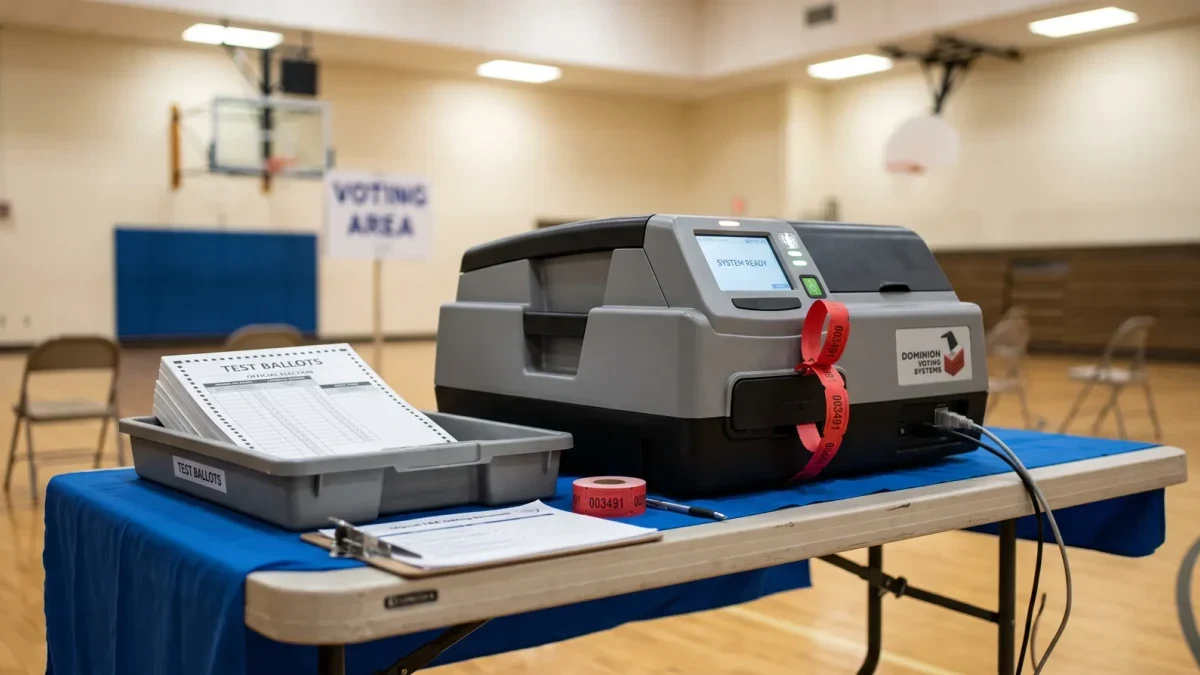
State certification typically adds three things. Local conditions: ballot formats, accessibility requirements, and integration with the state's voter registration and results systems. Acceptance testing of delivered equipment against the certified configuration — the check that what arrived is what was tested. And contractual and escrow terms with the vendor, including source-code escrow provisions that several states use so auditors can inspect code if a dispute arises. States also set usage rules that certification does not: whether paper records are required, how post-election audits sample those records, and what may be connected to networks — with the strong weight of federal guidance, including joint advisories from the FBI and cybersecurity agencies, treating air-gapped, paper-backed systems as the security baseline.
Where the system strains
Four pressure points recur in EAC and state records. Timing: certification campaigns take many months to years, so a system certified shortly before an election cycle often cannot be deployed widely — the reason states plan purchases years ahead, and the reason last-minute software changes are refused regardless of intent. Market concentration: a small number of certified vendors serve the national market, and the certification cost itself is a barrier to entry that keeps it small. Legacy systems: equipment certified under decades-old guidelines remains legal to use in states that never raised their floor, which is where most documented voting-equipment criticism actually lands. And trust: certification is a technical verdict, not a public narrative; the post-2020 years demonstrated that lab reports do not by themselves persuade voters, which pushed states toward evidence — risk-limiting audits that check tabulation against paper, now required or available in a majority of states — as the persuasion layer.
FAQ
Who certifies voting machines in the U.S.?
Two layers: EAC-accredited labs test against the voluntary federal guidelines, then each state certifies or accepts systems under its own rules — there is no single national approval.
Does certification cover software updates?
No — certification covers the exact tested configuration; changes require recertification or defined change-management review, which is why last-minute updates are routinely refused.
What are risk-limiting audits?
Statistical post-election checks that sample paper ballots to confirm the tabulated outcome, required or available in most states as the evidence layer on top of certification.