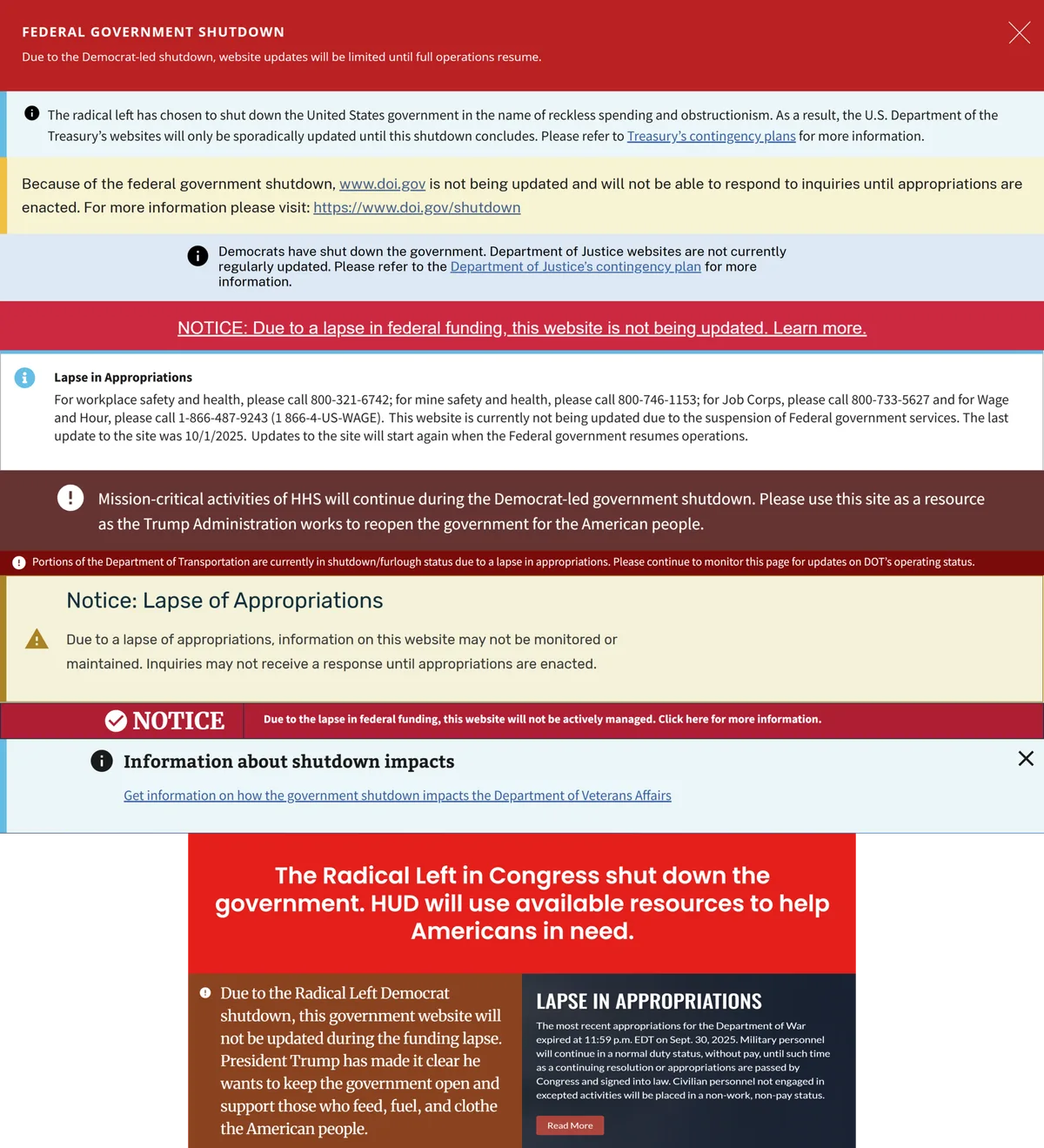
A government shutdown sounds like an accident. It is not. In the United States it is the built-in result of a missed deadline. Congress must pass funding bills before the fiscal year starts. If it does not, the law itself forces agencies to close their doors.
Here is how the machinery works, step by step, from the deadline to the deal that ends the fight.
The Deadline That Starts Everything
A shutdown, officially known as a lapse in appropriations, happens when funding legislation is not enacted before the new fiscal year begins. Federal agencies then curtail services, halt non-essential operations, and send non-essential workers home. Workers who protect human life or property stay on. Readers following this should also see Rulemaking: How a Federal Rule Actually Gets Made.
The hard line dates to 1980, when Attorney General Benjamin Civiletti issued a legal opinion requiring agencies to stop rather than spend without an appropriation. Since 1990, every funding gap longer than a few hours has produced a shutdown. The 2013 shutdown lasted 16 days. The 2018–19 shutdown lasted 35. When one hits, the effects ripple past Washington, closing parks and museums and touching state and local programs.
Twelve funding bills keep the government running, and Congress rarely finishes them on time. Stopgap measures fill the gap in normal years. A fight can start over any piece of that stack: a policy rider, a spending level, or the shape of a single agency budget. When the chambers and the President cannot agree, the calendar wins. We covered a connected angle in Continuing Resolutions: How Stopgap Funding Actually Works.
The Law Behind the Lockout
The rule that bites is the Antideficiency Act. It bars federal officials from spending or committing money that Congress has not provided. An official who breaks it faces penalties. That is why agencies stop work instead of drifting along without a budget. The act also stops agencies from entering contracts in excess of the amounts available in their funds.
Furloughs, Essential Work, and the Cost
During a lapse, only essential employees keep working, and many of them wait for pay until funding returns. The economics are not free either. During the 2013 shutdown, the rating firm Standard & Poor’s estimated it had taken 24 billion dollars out of the economy and shaved growth that quarter. Estimates like that one are debated, but the direction is not: a shutdown drains output while it lasts.
The Fight Over a Bridge Bill
Most shutdown fights are really fights over a bridge. A continuing resolution extends funding for a set period while negotiators work out full bills. That gives everyone time, and it is usually the vehicle that ends the standoff. Each CR carries a date, so the pressure returns on schedule until a full deal lands.
But a CR can fail like any bill. One chamber or the President can block it over its contents. Congress can even try to override a veto, though that takes a two-thirds majority in both houses. Until some bridge passes, the lapse continues.
The strain builds in ordinary ways. Workers wait on pay. Contractors wait on invoices. Park towns wait on visitors. Every closed office shifts costs to someone else, which is part of why shutdowns rarely last long once both sides feel it.
How Shutdowns End
Shutdowns end the way they started: with a vote. One side blinks, a package matures, and a CR or full appropriations bill clears both chambers and gets a signature. Funding flows again, furloughed workers return, and the clock resets to the next deadline.
Conclusion: A Fight With a Rulebook
A shutdown fight is a standoff played under a strict rulebook. The deadlines are fixed. The spending ban is real. The bridge bill is the prize. Anyone watching one unfold can track the same three things: whether the CR is moving, how long the lapse has run, and what the two sides say would end it. When those lines converge, the doors reopen.