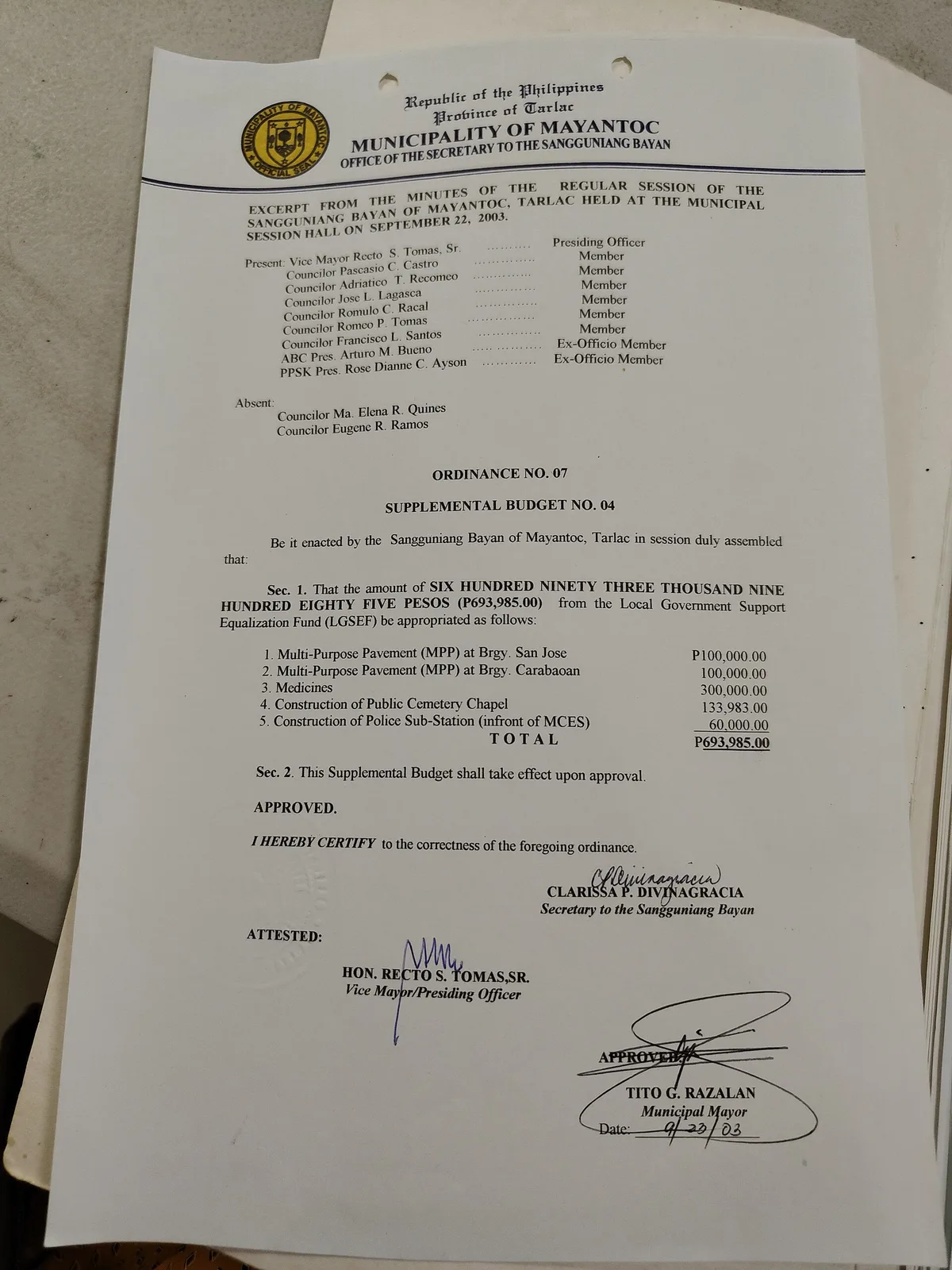
A municipal budget is the plan for how a city or town collects money and spends it. This guide walks through the cycle, the documents, and the practical steps for following the money in your own town. The details vary by state and country, so treat the outline below as a reading framework, not a description of any single jurisdiction.
The word itself is broader than many readers assume. According to Merriam-Webster, "municipal" means of or relating to a municipality and covers everything from municipal water supplies to municipal courts. That breadth is the point. One budget can fund many different services at once, and the exact mix depends on your jurisdiction.
The guide below is a general framework for reading budget documents; the specifics — dates, revenue sources, spending categories — will come from your own town's papers.
How does the municipal budget cycle work?
Local budget processes differ, but readers commonly encounter a sequence like this one. Treat it as a map for finding your bearings, and check your town's own rules.
- Preparation. A draft is assembled, typically by a finance office or executive, before it goes anywhere public.
- Proposal. A proposed budget is published. In many places this is the first document the public can actually read.
- Deliberation. The council or board discusses the proposal, and public comment may be taken. This is where priorities get debated.
- Adoption and execution. A vote sets the spending plan, and departments then operate against it, with results reported afterward.
The fiscal year matters here. Check the dates on the cover page before comparing figures across towns, because the period a given "budget" covers may not match the calendar year.
Where does the money come from?
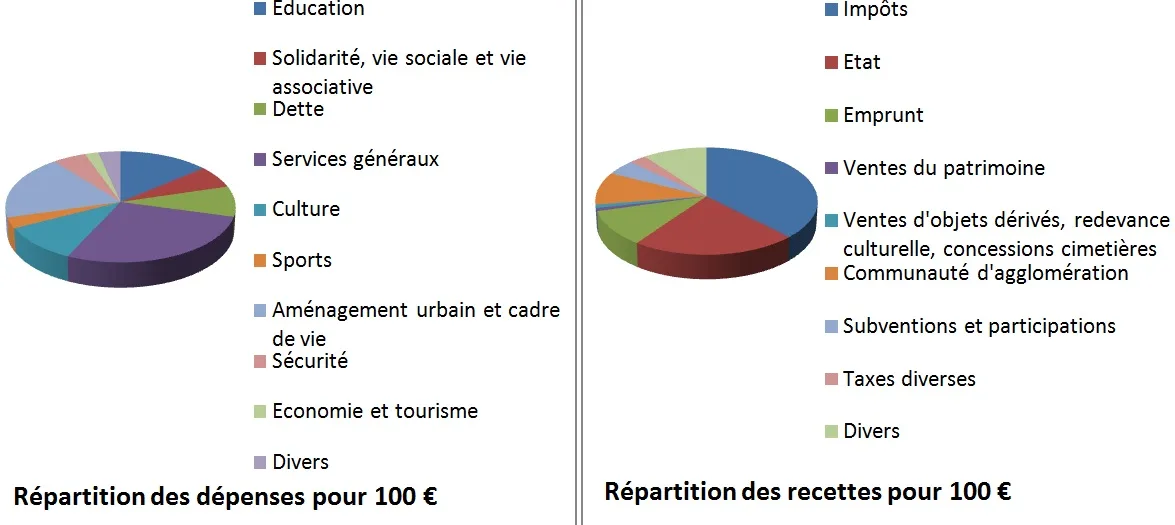
Local revenue comes from a mix of sources, and the mix shapes what a town can do. Depending on the jurisdiction, that mix can include property taxes, sales taxes, user fees such as water bills, parking, permits and recreation charges, and intergovernmental aid from state or federal programs. Which source dominates is a fact to check locally, not assume.
Each source has a different character, and the differences matter when you read a budget. Taxes, fees, and grants each carry different trade-offs in stability, visibility, and conditionality. When you read a local budget, the revenue side tells you how exposed the town is to each of those risks.
Where does the money go?
Spending is commonly organized into categories, and distinguishing them is a common reader challenge. Operating spending pays for day-to-day services; capital spending pays for long-lived assets. Some budgets also carry a separate debt-service line. How your town labels and finances each category is something the documents themselves will show.
Within operating spending, look at which lines are largest — the answer varies by town, and it is exactly the kind of fact a summary table will tell you. A budget line labeled "contingency" or "reserve" is worth reading closely; check the document's own explanation of what it is for.
Which documents should you actually read?
Municipal finance offices publish a lot of paper. Three kinds of documents do most of the work:
- The proposed budget. Read the executive summary and the fund summaries first. The detail schedules can wait.
- The adopted budget. Compare it against the proposal. The differences show what the council actually changed — the real record of deliberation.
- The annual financial report or audit. This is where actual spending appears, and where an independent auditor, if one is involved, flags problems.
A useful habit is to read the same document across two or three years. Year-over-year comparisons reveal drift that a single year's numbers hide: a line that grows steadily, a reserve that shrinks, a fee that quietly doubles.
What this means for tracking your town
Practical steps, in order:
- Find the finance office's page on the municipal website. Budget documents, meeting calendars, and hearing notices are usually posted there.
- Note the dates that matter: when the proposal is published and when the public hearing is held. Check locally how long the comment window runs.
- Start with the summary tables, not the appendices. Look for total revenue, total spending, the fund balance, and any year-over-year change the document itself highlights.
- Pick two or three line items you care about — say, library hours or road maintenance — and follow them across the proposal, the adopted budget, and the audit.
- Attend or stream one budget hearing. The questions other residents ask are a fast education in what the numbers do not say.
Public records make this possible. Municipal budgets, committee minutes, and audits are public documents, and researchers rely on them for exactly this kind of tracking — as the example sentences collected by the Cambridge Dictionary show, drawing on municipal reports and committee minutes as routine evidence in local-government research.
Why do local budgets stall, and what is the strongest counter-argument?
The honest answer to "why can't the town just fix this" is usually a constraint, not indifference. Towns operate inside legal and financial limits set elsewhere — statutory, contractual, and intergovernmental — and a council working inside those walls has less room than its critics assume. What those limits are in your state is a fact to verify locally. This connects to our earlier piece, Debt Limit After the $5 Trillion Raise: A Clock That Runs Quietly. This connects to our earlier piece, Debt Limit After the $5 Trillion Raise: A Clock That Runs Quietly.
The strongest counter-argument to tight local control is that it can produce underinvestment: officials defer maintenance because cutting a repair line is less visible than raising a tax. The strongest counter-argument to loose local control is the opposite: easy money invites spending that outlasts the revenue. Which critique bites depends on the town's own rules. That is a reason to read your town's constraints, not just its priorities.
The takeaway
Municipal budgets are not mysteries; they are documents, produced on a schedule, with defined entry points for the public. The cycle — proposal, deliberation, adoption, audit — rewards readers who show up at the right moments with the right two or three questions. The work is showing up when it counts.
For readers who want to go deeper on how government documents work more broadly, the same skills apply beyond the town line: see our explainer on how to read a policy proposal like an analyst, or our coverage of how stopgap funding actually works at the federal level, where the same cycle runs with higher stakes. More policy news coverage tracks these processes as they move.