Does winning attention win elections? Not necessarily, according to research from Georgetown University's McCourt School. Associate Professor Jonathan Ladd and Professor Lisa Singh examined survey, social media and news coverage data from the 2016, 2020 and 2024 presidential elections. Their finding, laid out in the new book American Presidential Campaigns in the Attention Economy: the candidate who dominates headlines and feeds does not automatically dominate favorability.
The book matters for anyone who follows policy or politics, because it tests a piece of conventional wisdom that shapes strategy in every campaign war room. The McCourt researchers found that no candidate adapted to the new media environment better than President Donald Trump. Yet dominating attention did not always translate into net favorability. That gap between visibility and popularity is the core of the story.
The research also speaks to a question that reaches past campaigns: what people actually absorb and remember when algorithms, not editors, decide what they see. That is a shared-knowledge problem, and it sits close to the territory this publication covers in its analysis of how information systems shape public decisions.
What is the attention economy?
The attention economy is the term for a media environment where the scarce resource is not news but attention. Ladd and Singh define the shift plainly. For decades, people chose their own news. They picked a channel, a paper, a section. Now, much of what people see is recommended to them by algorithms — systems that surface whatever gets more engagement or a reaction, or makes a viewer want to keep watching.
Ladd describes the change in consumption habits behind it. People consumed less and less television. Exposure to algorithm-determined information grew across each election the researchers tracked. In his framing, the broad shift is toward any media where you do not self-select what you watch or read; something is recommended to you instead.
How did the researchers study it?
The book's method is unusual because it combines four kinds of data. Singh, whose background is in data science, describes the challenge as connecting what people consumed with what they remembered.
- Survey data showing what people remembered from each campaign.
- Social media data on what circulated during the elections.
- Newspaper data on what was covered.
- Television data on what was broadcast.
The researchers tracked these patterns across the 2016, 2020 and 2024 presidential elections, though Ladd notes that little of the 2024 data made it into this book. The pairing matters: coverage alone tells you what was available. Memory data tells you what stuck. The gap between the two is where the book's findings live.
Why did Trump dominate attention without always gaining from it?
The conventional wisdom in the attention economy holds that the candidate with the most attention will be the most popular and will win. The McCourt finding is a qualification, not a reversal: getting the most attention is not a guarantee of popularity, or of people remembering positive things about a candidate.
The mechanics differ by cycle. In 2016, Trump received heavy traditional media and social attention across a range of topics, which Singh says helped him a great deal. Scandals surfaced, but none maintained persistent coverage. In 2020, the story flipped. Trump kept his attention advantage, but he could not move off the COVID-19 pandemic topic. He tried to change the subject; the pandemic was what people remembered, because of its impact on their daily lives. Biden, by contrast, drew less attention but carried no scandal that stuck to him the same way. Trump still got most of the media attention — and lost ground anyway.
One detail in the data surprised Ladd himself. The researchers split news sources into high-quality outlets (a good reputation for accuracy, less bias) and lower-quality ones. Trump consistently received more media mentions than his opponents across all source types. But his lead was even larger in high-quality sources during 2016 and 2020. The advantage tends to hold steady, or grow, as source quality increases. The pattern showed up not just in traditional media but on social media and in people's open-ended survey responses about what they remembered. Readers following this should also see The GAO High-Risk List, Mid-Cycle: 38 Areas and One New Entrant.
What does this mean for policy?
The researchers raised the question of what their findings mean for shared civic knowledge — the body of facts and stories a public holds in common — and what policy solutions might address the shift. The McCourt interview does not settle that question; it frames it. When algorithms choose what people see, and what people remember tracks daily-life impact more than raw coverage volume, the levers a policymaker might pull are different from the ones the old media system offered.
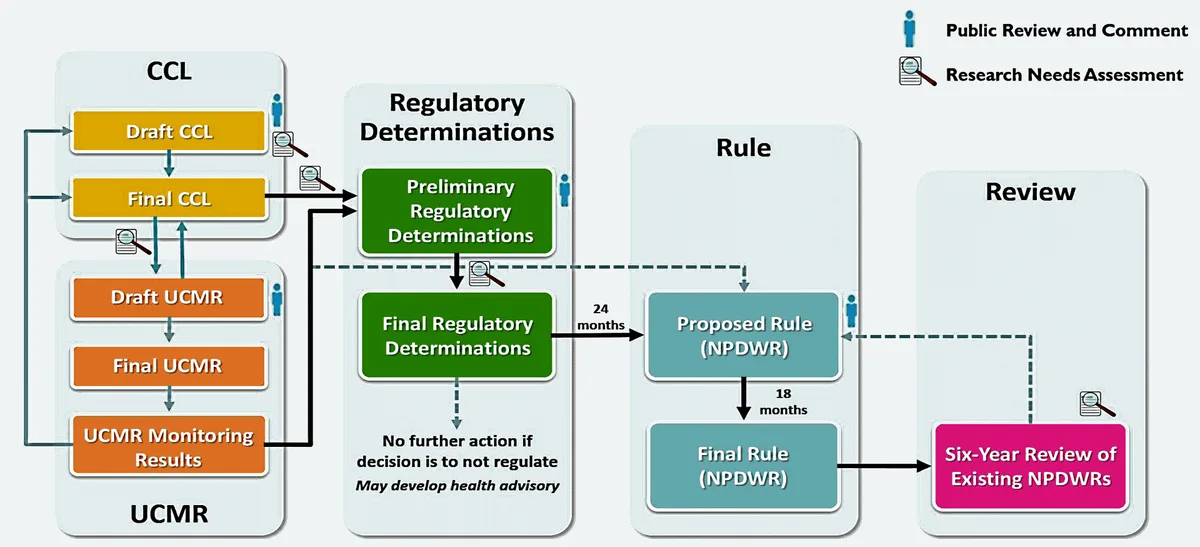
That framing connects to a wider set of questions about how information and government interact — the same territory as this site's coverage of civictech, where the design of systems determines what citizens encounter. A campaign book is not a rulemaking primer, but the underlying mechanism is familiar to anyone who has read how a federal rule actually gets made: outcomes depend on the plumbing, not the press conference. We covered a connected angle in Rulemaking: How a Federal Rule Actually Gets Made.
What should a newcomer take away?
Three points, all drawn from the book's own findings. First, the media environment changed structurally between 2016 and 2024, from self-selected news to algorithm-recommended news. Second, attention and favorability are separate variables; one does not guarantee the other, and 2020 is the clean demonstration. Third, the methods matter — pairing coverage data with memory data is what allowed the researchers to see the gap at all.
What remains unknown is the part the book itself flags as open: the full 2024 picture, and the policy responses the authors raise but do not resolve. Readers who want the detail should go to the McCourt School's own interview with the authors, which is the primary record of these findings.