Extended examinations of how institutions behave over a decade: budgets, headcount, capability, and the quiet erosion or recovery of state capacity. Sources are audit offices, statistical agencies and comparative studies. Intended for policy researchers, funders and senior officials who need trend evidence rather than a weekly snapshot.
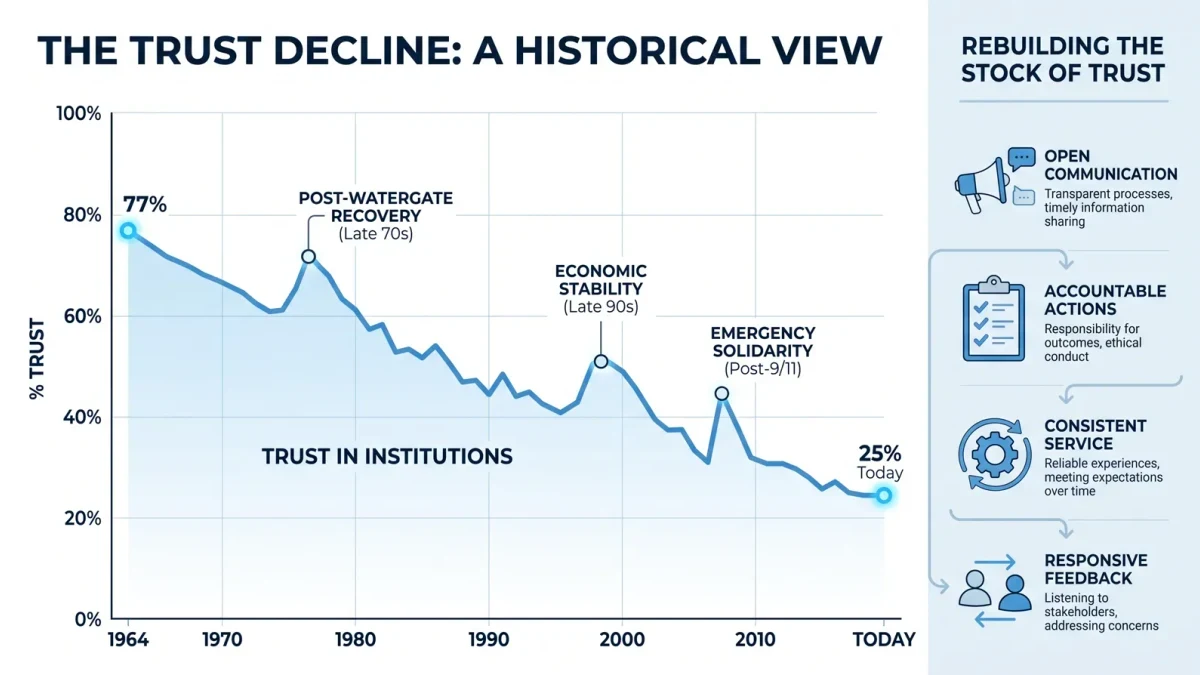
Trust has fallen from 77 percent in 1964 to a quarter of Americans today, and the research is clear about what moves it: competent service, not messaging.
Public-sector performance metrics get gamed by routine — wait times redefined, backlogs re-categorized, calls deflected — and the fixes are design choices, not exhortation.
A 1995 law was supposed to count the cost of federal rules on state and local budgets — it counts, and then Congress waives, and the costs arrive anyway.
Disaster, pandemic, and war appropriations now move outside the budget's normal rules — faster, larger, and with weaker controls than the annual process they bypass.
Federal grants carry reporting, audit, and procurement rules across multiple frameworks — and the burden falls hardest on the smallest recipients, where it decides who applies at all.