Accounts of attempts to remake public bodies: mergers, devolution, staffing overhauls and shared service centers. Each piece records the case made for the change, the money spent, and the measurable result several years later. Written for officials planning reorganizations and for the auditors who eventually assess them.
Deferred resignation and reduction in force both shrink payrolls, but they select opposite people — volunteers with options versus the bottom of a retention register.
Shutdowns are not furloughs without consequence — the measured bill includes back pay for work not done, lost user fees, and economic drag that a reopening does not refund.
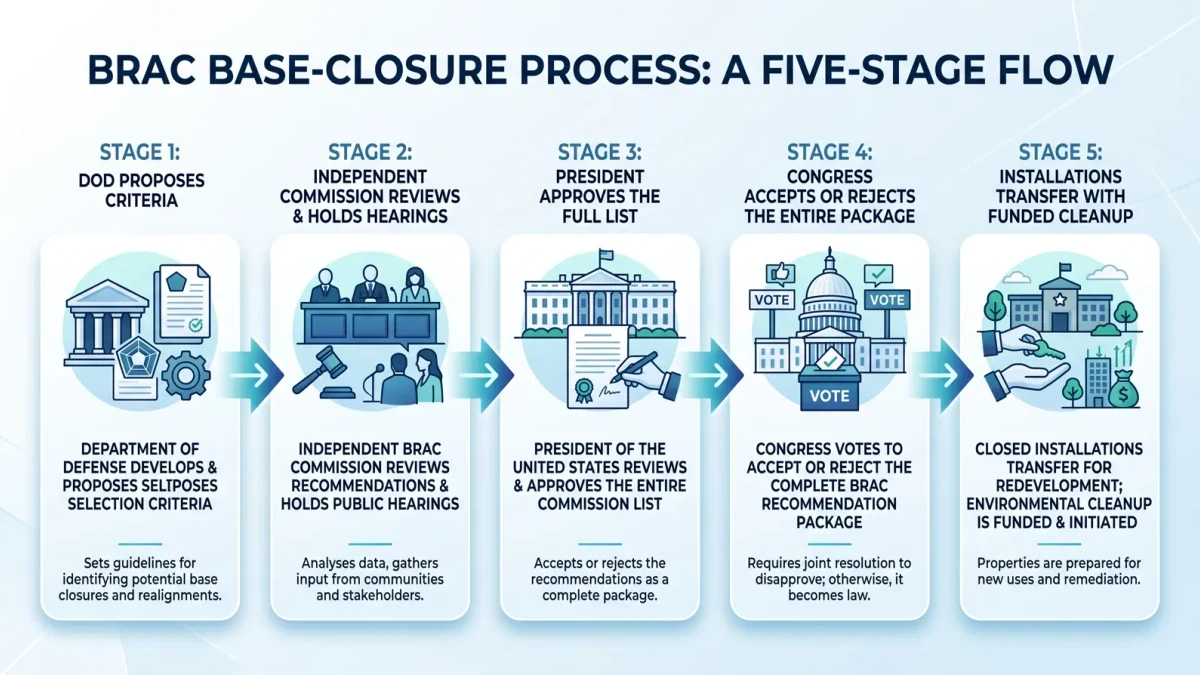
The Defense base realignment and closure process closed hundreds of installations with less paralysis than any other consolidation tool — because it took the vote away from Congress.
An office without a Senate-confirmed inspector general keeps auditing, but its referrals slow, its subpoenas soften, and its independence becomes an acting arrangement.