The debt limit is currently $41.1 trillion, raised by $5 trillion in July 2025 as part of the One Big Beautiful Bill Act reconciliation package — the largest single increase in the statutory ceiling's history, replacing the $36.1 trillion level that had been reinstated in January 2025 when the Fiscal Responsibility Act of 2023's suspension expired. Analysts including the Bipartisan Policy Center project the new headroom will last into 2027, which means no immediate Treasury crisis in 2026 — and no reason to stop watching. The Congressional Budget Office's 2026-2036 outlook, published as the deficit trajectory's authoritative baseline, projects a $1.9 trillion fiscal 2026 deficit, and each year of borrowing at that scale consumes the new headroom faster than a flat ceiling would suggest.
How the current arrangement works
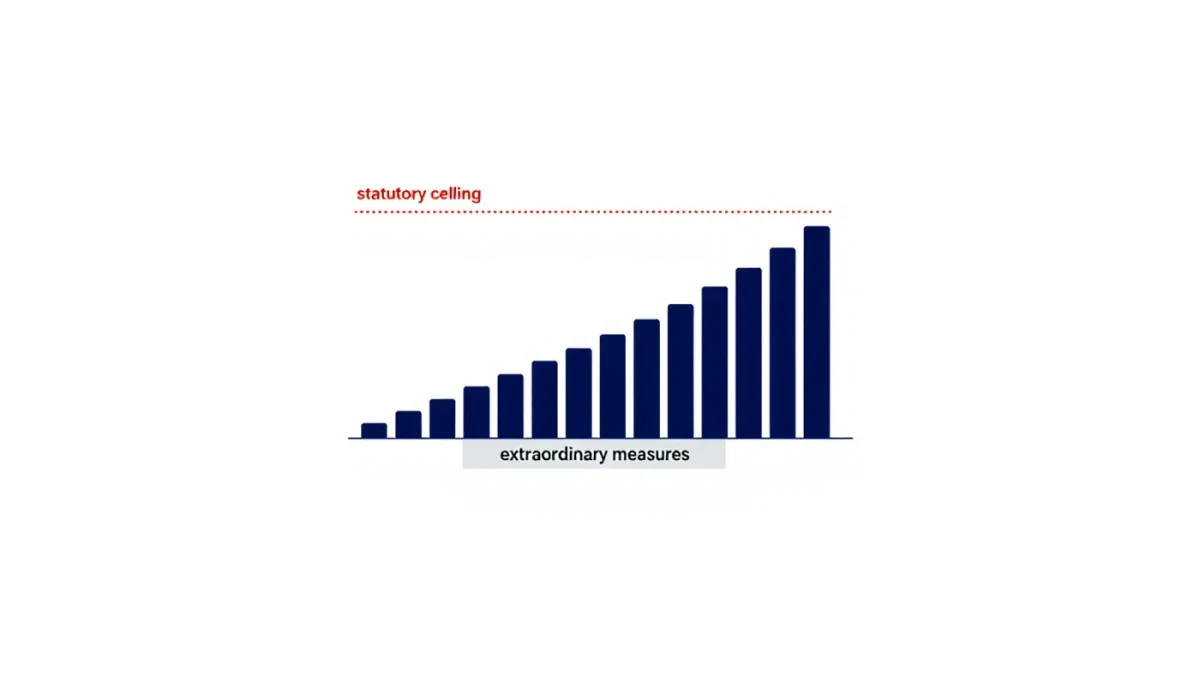
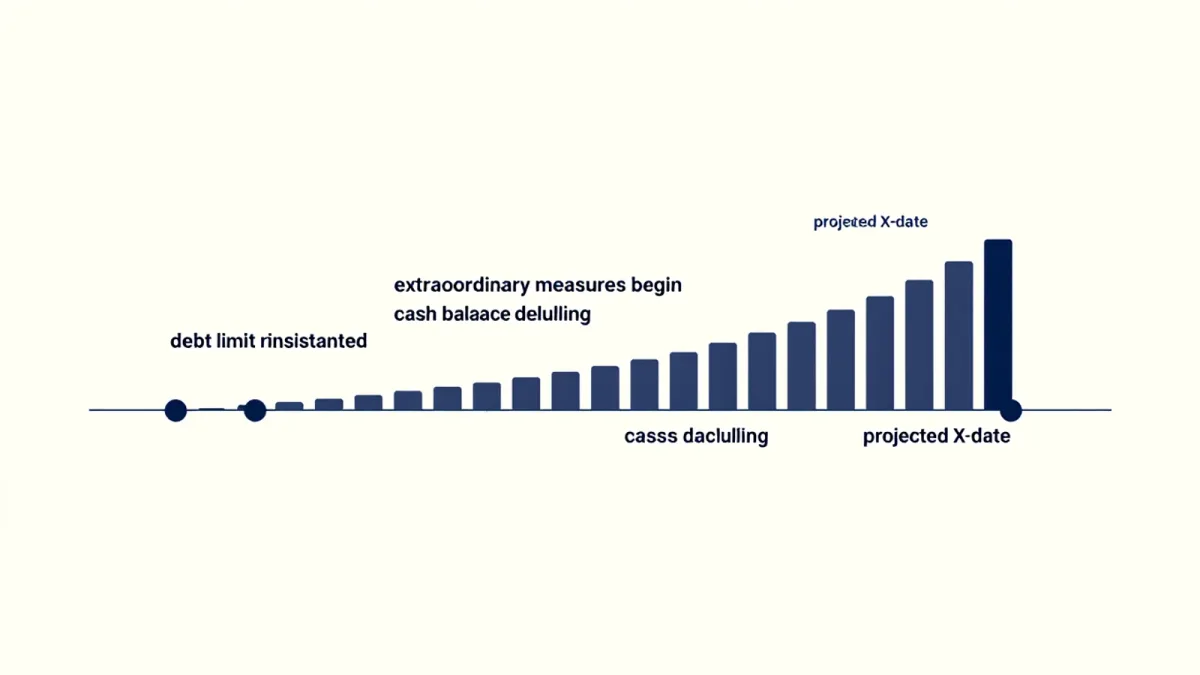
Unlike the 2023 law's suspension — which removed the ceiling entirely for two years — the 2025 change is a fixed increase, so the limit binds mechanically once outstanding debt reaches $41.1 trillion. Before that point, Treasury operates normally; at it, the department turns to extraordinary measures, the accounting maneuvers that temporarily suspend certain investments and, per Treasury's own January 2025 letter practice following reinstatement, buy weeks to months of borrowing room. The deadline that matters is the X-date — the day measures and cash exhaust — and projections place it beyond 2026, into 2027 by the Bipartisan Policy Center's analysis.
Why a distant deadline still shapes 2026
Three mechanisms keep the ceiling politically live even with room to spare. First, the arithmetic: CBO's outlook puts deficits near $1.9 trillion in fiscal 2026, rising to $3.1 trillion by 2036, and the same outlook estimated the 2025 reconciliation law adds materially to debt-service costs — roughly $718 billion by CBO's estimate — so the 2027 collision arrives with more force than the 2025 one. Second, the calendar: a 2027 X-date lands early in a new Congress with the same structural incentives that produced January 2025's reinstatement standoff and last year's record 43-day shutdown. Third, the market premium: brinkmanship episodes since 2011 have repeatedly carried measurable costs — 2013's delay cost Treasury tens of billions in higher borrowing costs over the following years per Federal Reserve staff analysis — and investors price proximity, not just breach.
What to watch
The indicators that matter in order: Treasury's quarterly refunding statements and daily debt statements, which show how fast the headroom fills; CBO's baseline updates, which move the projected collision date; and any revival of reform proposals — a pattern fiscal-policy commentary revisited after the 2025 increase — including process triggers like the Senate's pay-as-you-go rules or the return of the Gephardt-rule-style automatic debt-limit increase, both of which would change the 2027 math before it arrives.
FAQ
What is the debt limit right now?
$41.1 trillion, after the One Big Beautiful Bill Act raised it by $5 trillion in July 2025 from the $36.1 trillion level reinstated in January 2025.
When does the debt limit bind again?
Projections, including the Bipartisan Policy Center's, place the next binding deadline in 2027, given current deficit trajectories of roughly $1.9 trillion a year.
What are extraordinary measures?
Accounting maneuvers Treasury uses once the limit binds — suspending certain investments and redeeming others early — to keep paying obligations for weeks or months past the statutory ceiling.