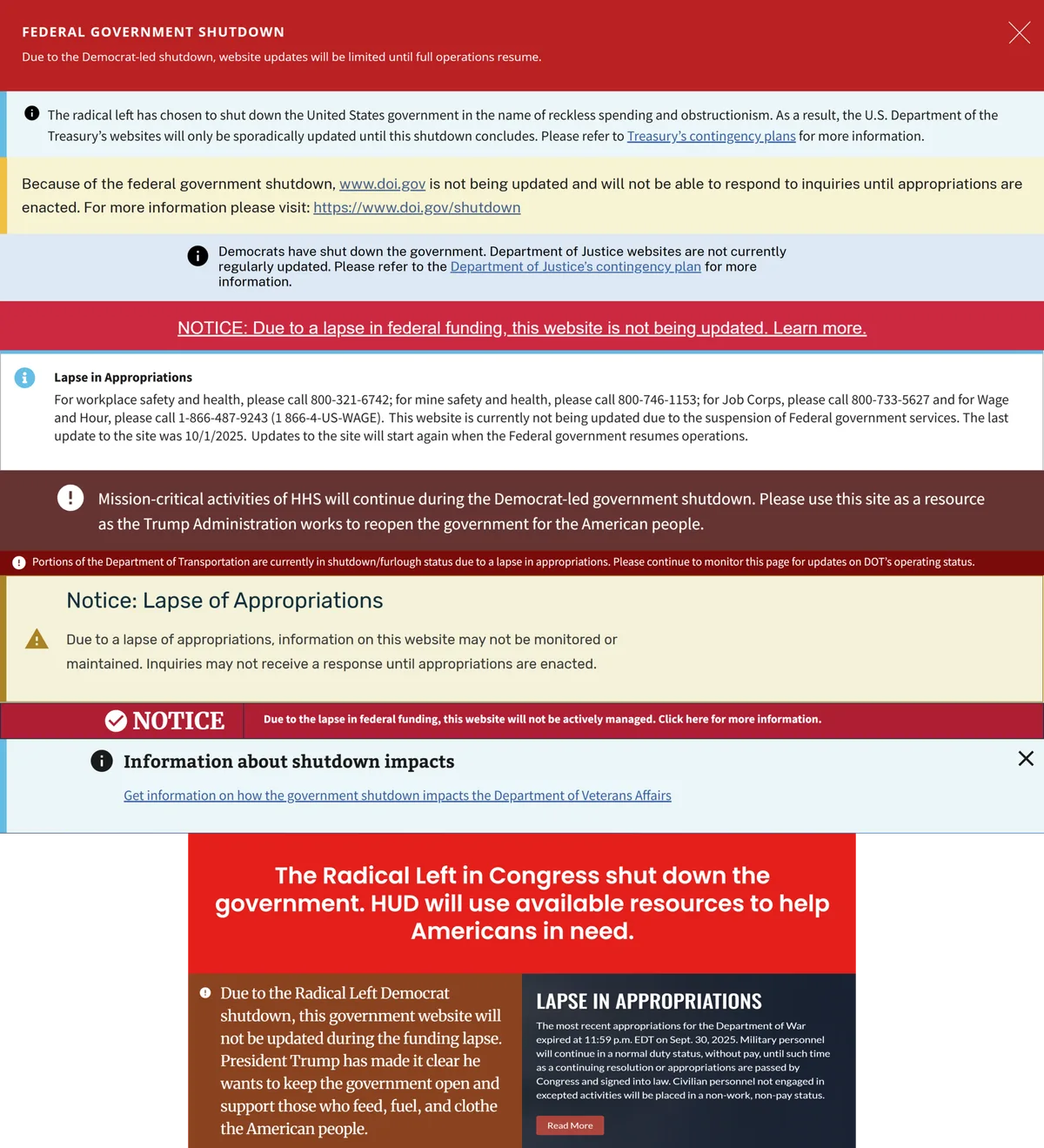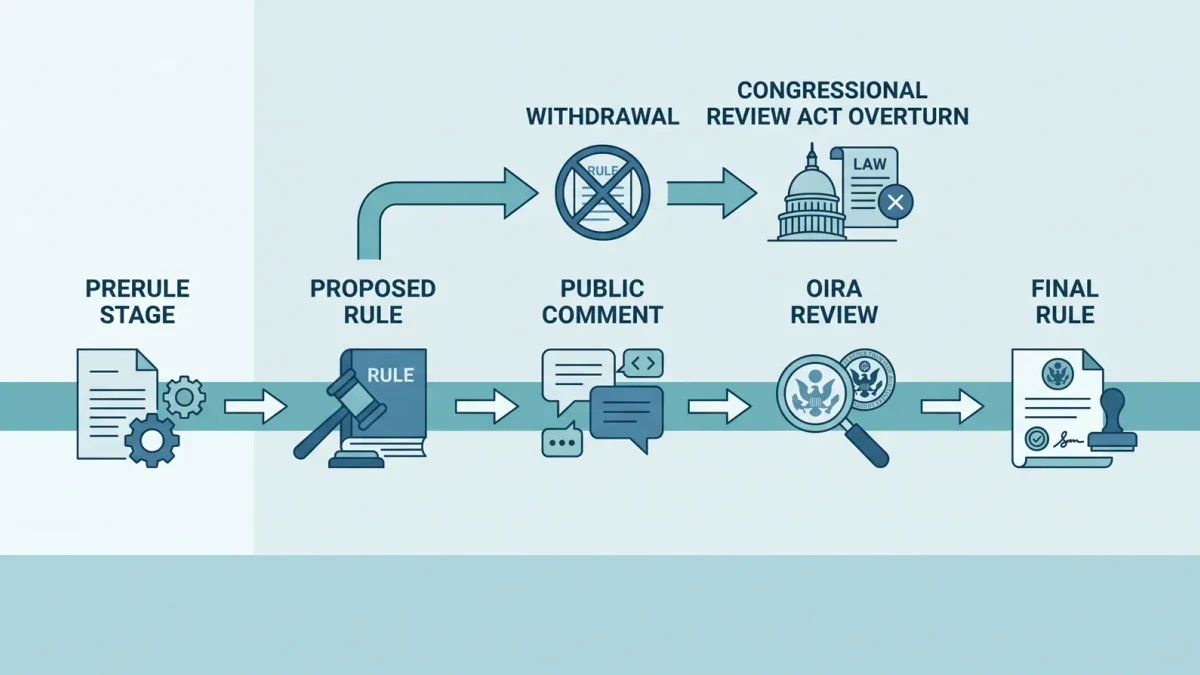
The Unified Agenda of Regulatory and Deregulatory Actions is the federal government's published pipeline: each spring and fall, agencies list the rules they are working on, with target timetable stages and priorities. The fall 2025 edition landed in an administration actively running the Congressional Review Act at record volume — Congress passed and the President signed 22 CRA resolutions in 2025 overturning prior-administration rules, the most in any single year since the act's 1996 creation, per Harvard Regulatory Review's February 2026 retrospective. That context is the correct lens for reading the current agenda: it is simultaneously a work plan and a political document, and its entries are commitments only in a specialized sense.
What the agenda actually contains
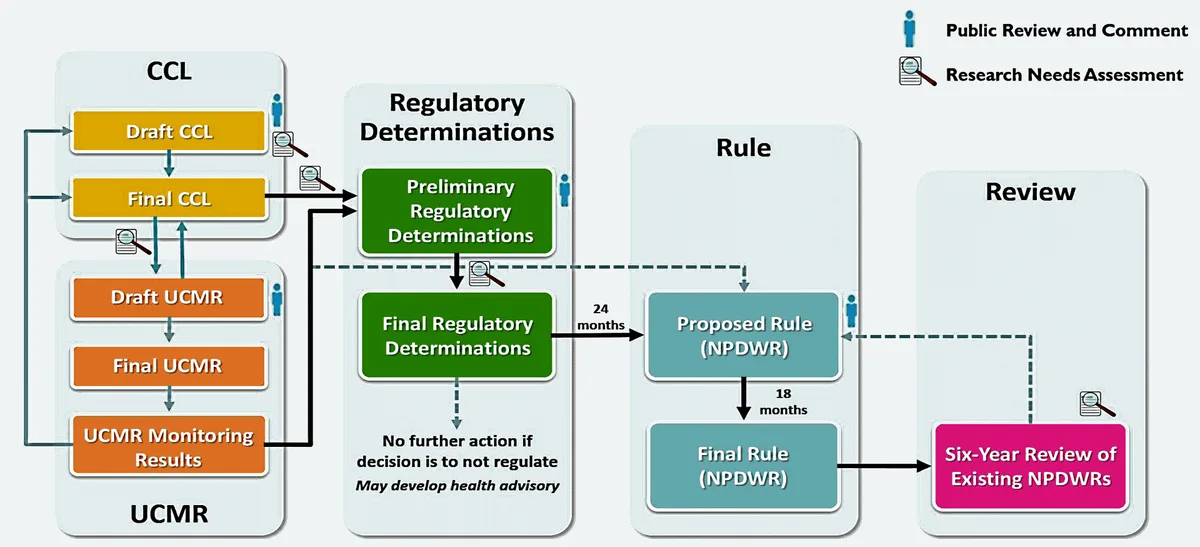
Each entry carries a regulatory identifier number, the agency and rule title, the statutory authority, an abstract, and a timetable of completed and projected stages — prerule stage, proposed rule, final rule — with dates, actual or targeted. The agenda also flags priorities and, in recent administrations, includes deregulatory items. The publication is required under the Regulatory Flexibility Act and executive-order practice, and it is the dataset from which analysts count the pipeline: how many rules each agency projects, how many carry statutory deadlines, and how many target the economically significant tier that receives Office of Management and Budget review under Executive Order 12866's current successor framework.
How to read it without being fooled
Three reading rules hold across administrations. First, timetables slip by design: a proposed rule listed for this quarter routinely arrives quarters later, because interagency review, the Office of Information and Regulatory Affairs clearance process, and litigation risk all consume time the agenda does not model. Second, long-term entries are often placeholders — items carried from agenda to agenda for years signal either statutory pressure the agency cannot satisfy or an item parked indefinitely, and the way to tell them apart is whether a statutory deadline appears in the abstract. Third, what is missing is the signal: agencies under de-regulatory pressure remove planned rules quietly, so analysts compare editions to see what vanished — the same comparative reading that documented rule withdrawals across administrations.
Why this cycle's agenda is unusual
The 2025-26 cycle pairs the agenda with two forces that make its timetable entries softer than usual. The CRA record — 22 resolutions signed in 2025, with the cumulative total reaching 23 by late April 2026 per Ballotpedia's tracking — demonstrated that late-window rules can be overturned after the fact, which raises the value of withdrawing proposed rules before finalization rather than defending them. And the post-Chevron legal environment, following the Supreme Court's 2024 Loper Bright decision, has increased drafting caution on rules that interpret ambiguous statutes, because agency interpretations no longer receive judicial deference. Both push agencies toward fewer, more carefully grounded timetable commitments — an agenda that under-promises by design.
FAQ
What is the Unified Agenda?
The twice-yearly federal publication listing rules agencies are developing, with stages, timetables, and priorities — the regulatory pipeline in document form.
Are agenda timetables binding?
No. Targeted dates slip routinely under interagency review, OIRA clearance, and litigation caution; treat them as intent, not schedule.
Why compare agenda editions?
Because removals are the signal: quietly dropped planned rules show an administration's real priorities better than anything newly listed.